
WELCOME BONUS 300%
UP TO €2000 + 100
FREE SPINS
UP TO €2000 + 100
FREE SPINS
Home → Blackjack
Blackjack at Casino Mafia: Variants, Rules and Payouts
What Push Means: Stake Returns to You
A push occurs when the player hand and dealer hand share identical point totals, resulting in the original wager being returned without profit or loss. This outcome is standard across all Blackjack variants including Liberal Vegas Strip and 6 Decks S17 where no surrender applies. The house edge remains unaffected by pushes because the casino retains its mathematical advantage on all decisive hands. Players relying on basic strategy will encounter pushes frequently enough to expect them as part of long-term variance.
The concept differs significantly from a win where the player receives 1:1 payout or a Blackjack paying 3:2. In Liberal Vegas Strip with S17 rules, pushes preserve bankroll integrity while other outcomes determine overall profitability. A $10 bet returning $10 exactly matches the initial stake without generating any additional revenue for the operator. This mechanism ensures that neither party gains ground during tied rounds, maintaining equilibrium in the game flow.
Surrender rules like Late Surrender offer an alternative to pushing by allowing players to forfeit half their bet before resolution. While a push returns 100% of the stake, surrendering yields only 50% recovery after the dealer checks for Blackjack. This distinction matters because Early Surrender provides up to -0.6 percent improvement versus Late Surrender's -0.08 percent gain. Understanding these mechanics helps beginners manage expectations regarding potential losses during uncertain hand developments.
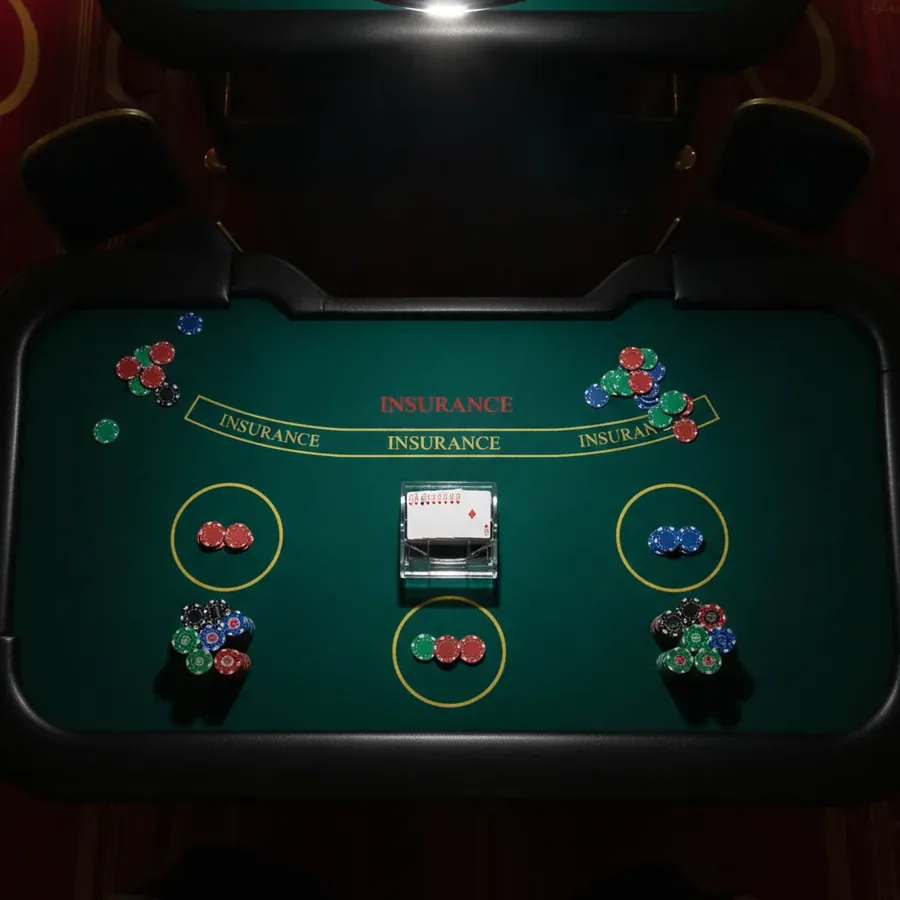
Even Money only possible with Dealer Ace
Even money applies exclusively when a player holds a natural Blackjack and the dealer shows an Ace as their upcard. This option guarantees a 1:1 payout immediately, avoiding the risk of losing the entire hand if the dealer also possesses Blackjack. It effectively converts the standard 3:2 Blackjack payout into a guaranteed win equal to the original wager amount. This feature is available in games like Liberal Vegas Strip and 6 Decks S17 where insurance options exist.
The mathematical rationale involves comparing the expected value of taking even money against declining it and purchasing insurance. Insurance pays 2:1 but carries a 7.47% house edge, making it unfavorable unless card counting reveals a true count above +3. By accepting even money, players sidestep this negative expectation scenario entirely, securing immediate profit regardless of the hole card. This strategy eliminates volatility associated with potential dealer Blackjacks in high-stakes environments.
For a $100 bet, declining even money risks losing the full amount if the dealer completes a Blackjack, whereas accepting it locks in $100 profit. The opportunity arises only once per hand when both conditions are met simultaneously: player has Blackjack and dealer shows Ace. This rule applies uniformly across Infinite Blackjack and Quantum Blackjack Plus Live tables offering similar structural protections. Beginners should recognize this specific trigger condition to make informed decisions at the table.
Infinite Blackjack vs Classic Seven-Seat Table
Infinite Blackjack by Evolution allows unlimited players at one table, contrasting sharply with classic seven-seat configurations found in traditional setups. Each participant plays against the dealer independently using separate cards dealt from continuous shuffling machines rather than physical shoes. This format supports bets ranging from 1 to 5,000 EUR with an RTP of 99.47%, providing flexibility for diverse betting strategies. The absence of seat limitations enables higher traffic volumes without compromising individual gameplay integrity or speed.
Classic seven-seat tables require waiting for empty positions, which can delay participation during peak hours or popular sessions. Infinite formats eliminate this bottleneck by assigning unique card streams to each player, ensuring simultaneous action without interference between seats. Providers like Playtech utilize similar technology in Quantum Blackjack Plus Live, offering multipliers up to 1,000x on winning combinations. These innovations enhance accessibility while maintaining the core strategic elements required for successful blackjack play over time.
The comparison extends to side bet availability, with Infinite Blackjack featuring Any Pair, 21+3, Hot 3, and Bust It options alongside main game action. Traditional tables may restrict side bets due to space constraints or slower dealing procedures inherent in manual shoe management. With RTP differences negligible between formats (99.47% vs theoretical max), player preference often hinges on interface design and multiplier features. Modern digital implementations prioritize efficiency and engagement through scalable architecture supporting large concurrent user bases effectively.
Shoe, Cut Card, and 75 Percent Penetration
A cut card marks the position within the shoe where the current deck ends, signaling dealers to shuffle remaining cards promptly. Most professional casinos enforce a penetration rate of approximately 75 percent before initiating reshuffles to maintain game fairness and security standards. This threshold ensures sufficient card exposure for statistical analysis while preventing excessive wear on playing surfaces during extended sessions. Players observing this practice benefit from predictable cycle lengths that influence strategic decision-making processes consistently.
Penetration depth directly impacts the effectiveness of card counting techniques by determining how many cards remain unexposed after the cut. Higher penetration rates allow counters greater insight into deck composition changes, potentially shifting the house edge slightly in their favor temporarily. Conversely, lower penetration limits informational advantages, forcing reliance on pure probability models based on initial deal distributions alone. Standard practices typically align with industry norms established by major regulators overseeing land-based and online operations globally.
Online platforms simulate this process virtually, employing random number generators that mimic real-world shuffle frequencies without physical limitations. Tables like Lightning Blackjack operate under similar principles despite lacking tangible shoes, relying instead on algorithmic transparency for trustworthiness verification. Regulatory bodies mandate clear disclosure of these parameters to ensure compliance with responsible gambling frameworks worldwide. Understanding such operational details empowers users to assess platform reliability accurately before committing significant funds to long-term play.
Highroller from 500 EUR per hand
High roller tables accommodate substantial wagers starting at 500 EUR per hand, catering specifically to experienced players seeking elevated stakes. Limits extend up to 5,000 EUR in live dealer environments provided by Evolution and Playtech, enabling massive single-round payouts. Such ranges support aggressive betting systems requiring deep bankrolls capable of sustaining prolonged losing streaks without depletion. Operators configure these zones separately to isolate high-volume activity from casual recreational gaming areas effectively.
Bonus terms impose restrictions on high-stakes play since table games contribute only 10% toward wagering requirements compared to slots contributing 100%. A 300% welcome bonus up to €2,000 plus 100 free spins becomes less valuable when applied primarily to blackjack actions. Players must generate 4,000 EUR in turnover to unlock withdrawal privileges fully, necessitating careful allocation of resources across eligible titles. Misalignment between preferred game type and contribution percentages creates friction for dedicated blackjack enthusiasts pursuing promotional benefits efficiently.
Side bets introduce additional complexity for high rollers aiming to maximize returns beyond base game outcomes. Options like 21+3 or Hot 3 carry distinct house edges unrelated to main game performance metrics outlined earlier. Strategic integration requires balancing primary objectives against secondary opportunities offering varying risk-reward profiles dynamically. Successful execution demands precise calculation skills combined with disciplined emotional control during volatile market fluctuations impacting short-term results unpredictably.
Blackjack variants at a glance
| Variant | Payout | House edge | Rule | Bet range |
|---|---|---|---|---|
| Blackjack Ein Deck, klassische Regeln, 3:2 | 99.85% | 0.15% | Weniger Decks = niedrigerer Vorteil; ein Deck gibt ca. −0.48 Prozentpunkte gegenüber 8 Decks. Oft durch 6:5 Auszahlung kompensiert. | Blackjack 3:2, Gewinn 1:1 |
| Blackjack Liberal Vegas Strip (liberale Regeln, 3:2) | 99.72% | 0.28% | Günstigste Regelkombination: S17 + DAS + Resplit + Late Surrender. Standardabweichung 1,15 | Blackjack 3:2, Gewinn 1:1 |
| Blackjack Auszahlung 6:5 statt 3:2 (6 Decks) | 98.15% | 1.85% | Ersatz von 3:2 durch 6:5 fügt exakt +1.39 Prozentpunkte zum Vorteil des Casinos hinzu – stärker als jede andere Regeländerung. Bei $10 Einsatz zahlt Blackjack $12 statt $15. | Blackjack 6:5, Gewinn 1:1 |
| Blackjack Insurance / Versicherung (6–8 Decks) | 92.53% | 7.47% | Separate Nebenwette bis 50% der Hauptwette, wenn der Dealer ein Ass hat. Basisstrategie schreibt IMMER Ablehnung vor (außer Karten zählen bei True Count ≥ +3). Bei einem Deck Vorteil ≈ 5.88% | Insurance 2:1 |
| Blackjack Split / Double / H17 – Regel-Effekte | n.a. (Regel-Modifikatoren) | H17 +0.22 Prozentpunkte; RSA −0.08 Prozentpunkte; DAS −0.14 Prozentpunkte | Dealer Hits Soft 17 verschlechtert RTP um 0.22 Prozentpunkte; Resplit Aces verbessert um 0.08 Prozentpunkte; Double After Split verbessert um ca. 0.14 Prozentpunkte; 6 Decks statt 8 – ca. 0.02 Prozentpunkte. | Double – Einsatz ×2 mit einer Karte; Split – bis 4 Hände; Ass-Split meist mit einer Karte. |
| Blackjack 6 Decks, S17, DAS, DOA, Auszahlung 3:2, Basisstrategie | 99.54% | 0.46% | Dealer steht auf Soft 17; Verdopplung auf jeder Zweierkarte; Verdopplung nach Split erlaubt; keine Aufgabe. Basisstrategie ist für diesen Wert zwingend | Blackjack 3:2, normaler Gewinn 1:1, Insurance 2:1 |
Register Late Surrender correctly in three steps
The casino offers a Late Surrender rule which improves the Return to Player by approximately 0.08 percentage points compared to standard versions without this option. This specific modification allows the player to forfeit half of the bet after the dealer checks for blackjack, reducing the overall house edge significantly for beginners.
Early Surrender is noted as being much more valuable with reductions up to 0.6 percentage points, but it remains extremely rare in modern online platforms. Consequently, players must rely on the available Late Surrender mechanic to mitigate losses during unfavorable hands while maintaining their bankroll stability over extended sessions.
This surrender action results in a direct payout of fifty percent of the original stake rather than losing the entire wager upon a subsequent loss. Beginners should utilize this feature strategically when holding weak totals against strong dealer upcards to preserve capital and extend their gameplay duration effectively.
Perfect Pairs vs 21+3 in House Edge
The Infinite Blackjack table by Evolution provides four distinct side bets including Any Pair, 21+3, Hot 3, and Bust It for players seeking additional excitement. These options allow participants to wager on specific card combinations alongside the main game, offering varied payout structures that differ from standard blackjack outcomes.
The 21+3 side bet combines the player's first two cards with the dealer's upcard to form a poker hand, creating a separate betting opportunity within the round. This mechanic integrates traditional poker logic into the blackjack format, allowing enthusiasts to evaluate their chances based on familiar ranking systems and potential multipliers.
Evolution sets the minimum stake for these tables at one euro and the maximum at five thousand euros, accommodating both casual players and high rollers alike. The unlimited seating capacity ensures that groups can join simultaneously without waiting, providing a consistent and accessible environment for testing various side bet strategies.
Continuous Shuffling Machine shuffles after each round
Infinite Blackjack utilizes continuous shuffling technology to ensure fairness and prevent card counting strategies from gaining an advantage over the house edge. This mechanism maintains a constant deck composition throughout the session, making it impossible for players to track cards or predict future deals accurately.
The Quantum Blackjack Plus Live variant by Playtech introduces quantum multipliers that can reach up to one thousand times on three-card combinations totaling twenty-one points. This feature adds a layer of volatility to the standard game, potentially rewarding lucky streaks with significant payouts that exceed typical winning amounts.
Lightning Blackjack by Evolution applies lightning multipliers up to twenty-five times on won hands, enhancing the potential return for successful rounds without altering the base rules. Players engaging with these live dealer games benefit from dynamic bonus features that increase engagement while adhering to the established RTP of ninety-nine point five six percent.
Double Down vs Simple Hit on 11
Blackjack Split rules permit doubling down with only one card and splitting pairs up to four hands, offering flexibility in managing difficult starting positions. This regulation allows players to maximize their potential returns on strong initial cards like an eleven, where doubling down often yields the highest expected value.
Dealer hitting on soft seventeen increases the house edge by 0.22 percentage points compared to standing rules, directly impacting the long-term profitability for all participants. Resplitting aces improves the RTP by 0.08 percentage points, while doubling after split enhances it by approximately 0.14 percentage points, favoring aggressive playstyles.
The availability of six decks instead of eight reduces the house edge by about 0.02 percentage points, slightly improving the odds for skilled players. Beginners should note that double down rules apply strictly to the initial two-card hand, requiring strategic decision-making to optimize outcomes against varying dealer upcards.
Side Bets don't count towards bonus turnover
Tischspiele contribute only ten percent towards the bonus turnover requirement, whereas slots contribute one hundred percent, creating a significant disparity in wagering efficiency for players. This restriction means that engaging in blackjack variants like Infinite or Lightning Blackjack accelerates the accumulation of eligible volume much slower than playing slot machines.
The welcome bonus offers three hundred percent up to two thousand euros plus one hundred free spins, requiring careful management of contribution percentages to meet terms. Players utilizing side bets on tables such as 21+3 or Perfect Pairs find these wagers excluded entirely from the calculation, further complicating bonus fulfillment strategies.
Understanding the ten percent contribution rate is crucial for avoiding unexpected forfeiture of funds when attempting to clear the wagering requirement through table games. Strategic allocation of bankroll between high-contribution slots and low-contribution blackjack ensures that players can efficiently navigate the bonus conditions without unnecessary financial risk.
Unlimited seats via a split dealer hand
Infinite Blackjack by Evolution features a table limit of 5,000 EUR with unlimited player seats. This structural difference from Quantum Blackjack Plus Live, which also caps at 5,000 EUR, allows many more participants to share the single dealer hand simultaneously. Beginners benefit from the lower pressure of shared action, though they must still navigate the standard RTP of 99.47%. Side bets like Any Pair add complexity without altering the core seat availability.
The maximum bet of 5,000 EUR matches the upper bound of Quantum Blackjack Plus Live but exceeds Lightning Blackjack’s 2,500 EUR cap. While Infinite Blackjack offers unlimited seating, it lacks the quantum multipliers that can boost payouts in other live titles. Players wagering near the limit face higher variance compared to those playing smaller stakes on tables with stricter entry barriers. The absence of seat limits makes this format ideal for high-volume study sessions.
Lightning Blackjack restricts wagers to a maximum of 2,500 EUR while offering multipliers up to 25x on winning hands. In contrast, Infinite Blackjack focuses on volume rather than multiplier excitement, maintaining an RTP of 99.47% without random win boosts. This distinction means players seeking large occasional payouts should look elsewhere, whereas those preferring consistent play will find Infinite Blackjack suitable. The split dealer mechanism ensures continuous action regardless of the number of active participants.
Card Counting at Shuffle Master Table: why it fails
Blackjack Insurance is a side bet available in games using six to eight decks, carrying a house edge of 7.47 percent. This high disadvantage stems from the separate nature of the insurance wager, which pays 2:1 only when the dealer has an Ace. Counting cards does not improve the expected value of this specific bet, as its odds remain fixed relative to the deck composition. Beginners often mistake this side bet for a strategic tool, but it actually drains bankrolls rapidly over time.
The base strategy for Insurance mandates rejection unless the True Count reaches +3 or higher during card counting scenarios. Without achieving this specific count threshold, taking insurance increases the house advantage significantly beyond the standard game conditions. In contrast, standard blackjack variants like Liberal Vegas Strip offer a much lower house edge of 0.28 percent with optimal play. Relying on insurance without precise counting skills leads to substantial long-term losses due to the 7.47 percent house edge.
Insurance costs up to 50 percent of the main bet, creating a significant financial burden if called incorrectly. Unlike the main game where basic strategy minimizes losses, insurance acts as a separate negative expectation wager for most players. The requirement for a True Count of +3 is rarely met in typical online sessions, making the bet statistically unfavorable. Beginners should avoid this side bet entirely to preserve their bankroll against the high 7.47 percent house edge.
The payout ratio of 2:1 for Insurance appears attractive but fails to compensate for the increased probability of dealer blackjacks in multi-deck shoes. While card counting can identify favorable moments, the strict requirement for a True Count of +3 makes consistent profitability nearly impossible. This contrasts sharply with single-deck games where fewer cards allow for easier tracking and potentially better insurance timing. The structural design of insurance ensures it remains a losing proposition for the vast majority of participants.
Ace Split: only one card per hand
The rule allowing resplitting Aces improves the Return to Player by approximately 0.08 percentage points compared to restrictive splitting rules. However, most online casinos, including those offering Split/Double/H17 variants, limit ace splits to receiving only one additional card per hand. This restriction prevents players from building strong hands like double twenties, significantly reducing the potential upside of splitting aces. The mathematical benefit of resplitting is thus largely neutralized by the single-card limitation.
Resplitting Aces is a rare feature found in very few liberal blackjack variants, contrasting with the standard prohibition across most platforms. While the theoretical improvement is 0.08 percent, the practical impact is minimal because players cannot draw multiple cards to improve weak starting pairs. Standard games often allow doubling after split, which provides more strategic flexibility than ace resplitting alone. Beginners should prioritize games with favorable doubling rules over those merely permitting ace resplitting.
Double After Split (DAS) improves the house edge by approximately 0.14 percentage points, offering a greater strategic advantage than ace resplitting. DAS allows players to double their bet on any card received after splitting, increasing potential returns on strong hands. In contrast, the one-card limit on split aces restricts growth opportunities regardless of the subsequent card dealt. Players seeking optimal strategy execution should favor tables with DAS over those offering limited ace resplitting options.
The combination of hitting soft 17 and restricting ace splits creates a less favorable environment for advanced strategy application. H17 adds 0.22 percentage points to the house edge, outweighing the minor 0.08 percent gain from ace resplitting. Consequently, the net effect of these rules combined is detrimental to the player compared to S17 games. Beginners should look for S17 rules combined with DAS to maximize their chances of minimizing the house advantage effectively.
Surrender vs Playing Out on 16 vs 10
Late Surrender reduces the house edge by 0.08 percentage points by allowing players to forfeit half their bet after the dealer checks for blackjack. This option is valuable when holding a hard 16 against a dealer ten, where playing out yields a lower expected return. By surrendering, the player loses only 50 percent of the stake instead of facing the high probability of busting or losing to a stronger hand. This rule significantly improves the overall RTP in games where it is available.
Early Surrender is substantially more valuable, potentially reducing the house edge by up to 0.6 percentage points, but it is extremely rare in online casinos. Most platforms only offer Late Surrender, which occurs after the dealer has already verified they do not have an immediate blackjack. The difference in value between Early and Late Surrender highlights the importance of checking rule variations before playing. Beginners should always prioritize tables offering Late Surrender over those without any surrender option.
The payout structure of blackjack at 3:2 versus 6:5 affects how surrender decisions impact overall profitability. A 6:5 payout adds 1.39 percentage points to the house edge, making surrender even more critical in such unfavorable conditions. Without surrender, playing out on 16 vs 10 becomes increasingly costly in 6:5 games due to the reduced win payout. Players must adjust their strategy to account for both surrender availability and payout ratios to minimize losses effectively.
Surrendering a hand on 16 vs 10 saves money compared to playing out, especially in games with higher house edges. The 0.08 percent reduction from Late Surrender is modest but meaningful over thousands of hands. In contrast, the massive 1.39 percent penalty from 6:5 payouts dwarfs the benefit of surrender, making such games poor choices. Beginners should avoid 6:5 blackjack tables entirely and seek out 3:2 games with Late Surrender for the best statistical outcome.
Why Loss Progression Quickly Reaches Table Limit
The welcome bonus offers 300 percent up to 2,000 EUR plus 100 free spins, requiring a turnover of 40 times the bonus amount. This translates to 80,000 EUR in wagering requirements for the maximum bonus, which is challenging to meet through table games contributing only 10 percent. Slots contribute 100 percent, making them the only viable path to clearing the bonus efficiently. Attempting to clear the bonus via blackjack would require 800,000 EUR in total bets, quickly exhausting any reasonable bankroll.
Table games contribute only 10 percent toward the wagering requirement, meaning every 100 EUR beted counts as just 10 EUR toward clearance. This low contribution rate forces players to wager significantly larger amounts compared to slots, accelerating the depletion of funds. For example, clearing the bonus via blackjack requires ten times the volume of slot play. Beginners often underestimate this disparity, leading to rapid loss progression and failure to meet the terms.
The table limit of 5,000 EUR on Infinite Blackjack further constrains the ability to recover losses through high-stakes betting. Even with a large bankroll, the maximum bet restricts the speed of turnover required to clear the 80,000 EUR wagering target. Combined with the 10 percent contribution rate, reaching the limit becomes mathematically improbable without extreme variance. Players should recognize that table games are inefficient for bonus clearance and focus on slots instead.
Loss progression strategies fail because the combination of low table game contribution and high wagering requirements creates an insurmountable hurdle. Betting 1,000 EUR per hand on blackjack only contributes 100 EUR toward the 80,000 EUR goal. At this rate, clearing the bonus requires 800 such bets, exposing the player to significant risk of ruin. The mathematical reality of the bonus terms makes progressive betting on tables a flawed strategy for beginners.
Contact
Live - online chat
Banking









Providers












Mafia Casino 2026